
How to Generate Leads Through Social Media Marketing is an important question for businesses that want more customers online. Social media helps businesses connect with potential customers, promote services, and generate enquiries.
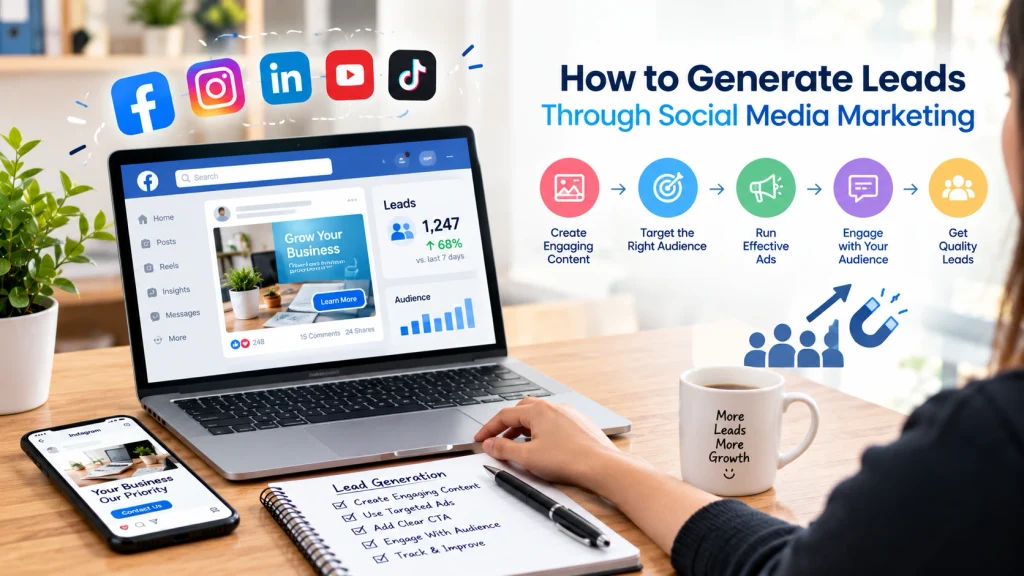
Platforms like Facebook, Instagram, LinkedIn, and YouTube offer many opportunities to reach the right audience. With the right strategy, businesses can turn followers into leads and leads into customers.
In this blog, RK Info Tech explains practical ways to generate quality leads through social media marketing.
What Is Lead Generation Through Social Media Marketing?
Lead generation means finding people who are interested in your products or services. These people may share their contact details, send a message, or request more information.
Social media lead generation uses social platforms to attract these potential customers. Businesses can use organic posts, paid advertisements, videos, and lead forms.
For example, a digital marketing agency can run Facebook Ads to attract business owners. Interested people can fill out a form or contact the agency directly.
1. Choose the Right Social Media Platforms
Every platform has a different audience. Choosing the right platform helps you reach potential customers more effectively.
- Facebook: Useful for local businesses, services, and lead generation campaigns.
- Instagram: Ideal for visual content, reels, products, and brand promotion.
- LinkedIn: Suitable for B2B services and professional networking.
- YouTube: Helps businesses educate audiences through videos.
- WhatsApp: Supports direct conversations and customer enquiries.
Focus on platforms where your target customers spend their time. You do not need to use every platform.
2. Understand Your Target Audience
Understanding your audience is essential for successful lead generation. You should know who needs your products or services.
Consider these questions:
- What problems do your customers face?
- Which services are they searching for?
- What is their location?
- What type of content do they prefer?
- Which platform do they use most?
For example, a local service provider may target customers within a specific city. A B2B company may focus on business owners and decision-makers.
A clear audience helps you create relevant content and better advertising campaigns.
3. Create Valuable and Engaging Content
Useful content attracts people who may become future customers. Avoid posting only promotional messages.
Share content that answers customer questions and solves common problems.
You can publish:
- Helpful tips and short guides.
- Customer testimonials and reviews.
- Before-and-after project examples.
- Educational reels and videos.
- Frequently asked questions.
- Service explanations and case studies.
For example, RK Info Tech can share digital marketing tips, website design examples, and social media campaign insights.
Consistent, useful content helps build trust and encourages potential customers to contact your business.
4. Use Social Media Ads to Reach Potential Customers
Paid advertising can help businesses reach people beyond their existing followers. Platforms such as Facebook and Instagram offer targeting options for advertising campaigns.
You can create advertisements for specific locations, audiences, and business goals.
To improve your campaigns:
- Choose one clear campaign objective.
- Use attractive images or short videos.
- Write a simple and relevant message.
- Highlight your main service benefit.
- Add a clear call to action.
- Test different advertisements.
Start with a manageable budget. Monitor performance before increasing your spending.
Remember that advertising results depend on your offer, audience, creative, and follow-up process.
5. Create a Strong Call to Action
A call to action tells people what to do next. Without clear instructions, interested users may leave without contacting you.
Use action-focused phrases such as:
- Get a Free Consultation
- Send Us a Message
- Request a Quote
- Book a Call
- Contact Us Today
- Learn More
Match your call to action with the purpose of your campaign.
For example, a consultation advertisement should direct users to a booking page or enquiry form. A product advertisement may lead to a product page.
Make the next step simple and easy to understand.
6. Use Lead Forms and Landing Pages
Lead forms make it easier for interested people to share their details. Some social platforms offer forms directly inside advertisements.
You can also send users to a dedicated landing page on your website.
A good lead form should request only necessary information, such as:
- Name
- Phone number
- Email address
- Required service
- Optional message
Avoid asking too many questions. Long forms may discourage people from submitting their details.
Your landing page should explain the service, highlight benefits, and provide a clear contact option.
7. Encourage Customers to Send Direct Messages
Direct messages provide a convenient way for potential customers to ask questions. Many people prefer messaging before making a purchase decision.
Invite users to message you for prices, details, or consultations.
Respond politely and provide useful information. Avoid sending repetitive promotional messages.
You can also prepare answers to common questions. This helps you respond faster and maintain consistent communication.
Always follow platform rules and respect customer privacy.
8. Use Reels and Short Videos
Short videos can explain your services quickly and attract attention. They are useful for education, product demonstrations, and customer stories.
Try creating videos about:
- Common customer problems.
- Quick tips related to your industry.
- Your products or services.
- Project results and demonstrations.
- Frequently asked questions.
- Behind-the-scenes activities.
Keep each video focused on one main idea. Add captions where helpful.
Finish with a clear next step, such as visiting your website or sending an enquiry.
9. Build Trust Through Reviews and Testimonials
People often research a business before contacting it. Reviews and testimonials can help them feel more confident.
Share genuine customer feedback with permission. You can also publish completed projects and explain how your service helped a customer.
Never create fake reviews or misleading results.
Respond professionally to comments and questions. A trustworthy online presence can encourage more people to enquire about your services.
10. Offer Something Valuable
A useful offer can encourage potential customers to share their details. It should solve a real problem for your target audience.
Consider offering:
- A free initial consultation.
- A downloadable checklist.
- A basic website review.
- A service guide.
- A product demonstration.
- A quotation based on customer requirements.
Make the offer relevant to your business. Explain what people will receive after submitting their information.
Avoid promises you cannot deliver.
11. Follow Up With Your Leads
Getting a lead is only the first step. You also need to respond and understand the person’s requirements.
Contact leads promptly when they have given permission to be contacted. Ask relevant questions and recommend suitable solutions.
Keep track of enquiries in a spreadsheet or customer management system.
Record the lead source, contact date, requested service, and follow-up status. This helps your team stay organised.
A professional follow-up process can improve the chances of converting enquiries into customers.
12. Track Your Social Media Marketing Results
Tracking helps you understand which activities generate useful leads. Do not measure success through likes and followers alone.
Monitor important metrics, including:
- Number of leads generated.
- Cost per lead.
- Click-through rate.
- Landing page conversion rate.
- Qualified leads.
- Leads converted into customers.
For example, an advertisement may generate many enquiries but few genuine prospects. Review lead quality before increasing your budget.
Use platform analytics and website tracking tools where appropriate. Test different audiences, messages, and landing pages to improve results.
Common Mistakes to Avoid
Some businesses struggle because their social media strategy lacks direction.
Avoid these common mistakes:
- Targeting an audience that is too broad.
- Posting without a clear goal.
- Using unclear calls to action.
- Ignoring customer messages.
- Sending users to irrelevant pages.
- Collecting unnecessary personal information.
- Failing to track campaign performance.
Review your strategy regularly. Small improvements can make your lead generation process more effective.
How RK Info Tech Can Help
RK Info Tech helps businesses improve their online presence through digital marketing services. A well-planned social media strategy can support brand awareness, customer engagement, and lead generation.
Our services can include social media management, creative content, Meta Ads campaigns, and website-related support.
We focus on understanding business goals and selecting suitable marketing activities. Campaign performance should be reviewed regularly to identify opportunities for improvement.
If you want to generate more relevant enquiries for your business, RK Info Tech can help you explore suitable digital marketing solutions.
Conclusion
Learning how to generate leads through social media marketing can help businesses connect with interested customers and create more sales opportunities.
Start by choosing the right platforms and understanding your audience. Publish useful content, use targeted advertising, and make it easy for people to contact you.
Most importantly, respond to enquiries and measure your results. Consistent effort and regular improvement can help build a stronger lead generation strategy.
Frequently Asked Questions
1. How to Generate Leads Through Social Media Marketing?
Choose the right platforms, publish valuable content, and use clear calls to action. You can also run targeted advertisements and direct users to lead forms or landing pages.
2. Which Social Media Platform Is Best for Lead Generation?
The best platform depends on your audience and business goals. Facebook and Instagram can support many consumer and local businesses. LinkedIn is often useful for B2B marketing.
3. Can Small Businesses Generate Leads Through Social Media?
Yes. Small businesses can attract enquiries through regular content, customer reviews, local targeting, and paid advertisements. Start with a simple strategy and track the results.
4. Are Social Media Ads Necessary for Lead Generation?
No. Organic content and direct engagement can generate leads without advertising. Paid ads can help expand reach and target specific audiences.
5. What Is a Social Media Lead Form?
A lead form collects information from interested people, such as their name, phone number, and email address. It helps businesses follow up on genuine enquiries.
6. How Can I Improve Lead Quality?
Target the right audience and clearly explain your services. Ask relevant questions in your form and review which campaigns produce qualified prospects.
7. How Much Should I Spend on Social Media Ads?
Your budget depends on your goals, audience, competition, and industry. Start with an affordable test budget and review lead quality before increasing spending.
8. How Often Should Businesses Post on Social Media?
Choose a posting schedule you can maintain consistently. Focus on useful, relevant content rather than publishing frequently without a clear purpose.
9. How Can I Convert Social Media Leads Into Customers?
Respond promptly, understand customer needs, and provide relevant information. Follow up professionally and explain how your product or service can help.
10. How Does RK Info Tech Help With Lead Generation?
RK Info Tech offers digital marketing support, including social media management, creative content, Meta Ads, and website-related services to help businesses improve their online marketing efforts.