Ask ten business owners how they plan to grow online and some will say “SEO” while others say “digital marketing,” as if they were rival choices. The SEO vs Digital Marketing question comes up all the time, and the answer is simpler than it looks. SEO is one tool. Digital marketing is the whole toolbox.
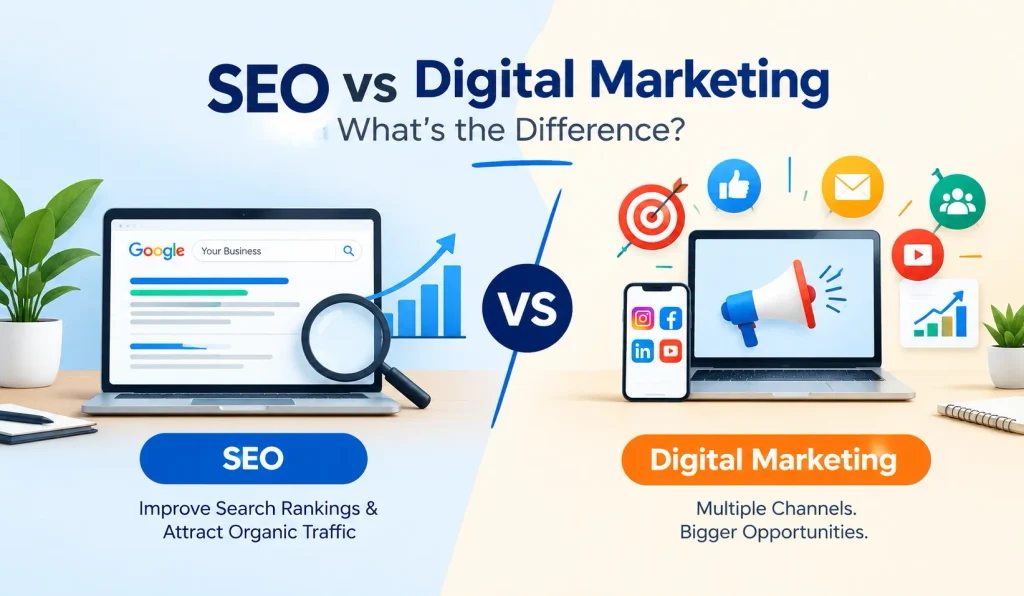
In this blog, RK Info Tech explains SEO vs Digital Marketing in plain language, covers what each one offers, and helps you decide what fits your business.
What Is SEO?
SEO stands for Search Engine Optimization. It means improving your website so it shows up higher in the organic (unpaid) results on Google and other search engines.
Think about how you search yourself. You type a question, glance at the first few results, and click one. SEO is how a business earns a spot in that short list.
The main parts of SEO:
- Keyword research. Finding the words and phrases people actually type, then using them naturally in your content, headings, and page titles.
- On-page SEO. Improving what’s on your pages: content, headings, meta titles and descriptions, images, and internal links.
- Technical SEO. Fixing the behind-the-scenes things, like site speed, mobile usability, crawlability, and indexing.
- Off-page SEO. Earning relevant backlinks and building your site’s reputation elsewhere on the web.
- Local SEO. Helping you appear in searches tied to a city or area, which matters a lot if customers come from nearby.
What Is Digital Marketing?
Digital marketing means promoting your products or services through online channels. The aim is to reach potential customers, build brand awareness, and bring in sales. Unlike SEO, it isn’t one method. You can use a single channel or mix several, depending on your goals.
The main digital marketing services:
- Social media marketing. Connecting with customers on Facebook, Instagram, LinkedIn, and similar platforms through posts, videos, and conversation.
- Search engine optimization. Yes, SEO belongs on this list. It brings in organic traffic and is a core part of digital marketing.
- Paid advertising. Campaigns on Google Ads and Meta Ads that reach specific audiences and generate leads.
- Content marketing. Blogs, articles, and videos that teach your audience something and build trust.
- Email marketing. Updates, offers, and newsletters sent to people who’ve shown interest.
- Video marketing. Using video to explain products, promote services, and connect with viewers.
SEO vs Digital Marketing: Key Differences
Put the two side by side and the differences show up in six places.
1. Meaning. SEO is one specific method for improving organic search visibility. Digital marketing is the complete approach to promoting a business across online channels.
2. Main goal. SEO aims to improve search visibility and attract relevant organic traffic. Digital marketing has broader goals: brand awareness, customer engagement, leads, and sales.
3. Cost. This is where SEO vs Digital Marketing confuses most owners. SEO needs investment in content, technical work, and ongoing optimization, but you don’t pay for every click. Digital marketing costs depend on what you use, since social media management, content creation, and paid ads all have different budgets.
4. Time to see results. SEO usually takes a while, because search engines need time to find, understand, and evaluate your improvements. Paid ads can bring traffic soon after launch, though results still depend on targeting, budget, and campaign quality.
5. Traffic sources. SEO focuses mainly on organic search traffic. Digital marketing can bring visitors from search, social media, paid ads, email, and more.
6. Long-term value. SEO can keep paying off when you maintain useful content and a healthy site. Digital marketing can support quick campaigns or long-term growth, depending on the channels you choose.
Benefits of SEO
- Improves your organic search visibility.
- Reaches people who are already searching for what you offer.
- Builds credibility for your website.
- Helps local customers find you.
- Improves your content and usability.
- Can generate leads over the long term.
A local service provider, for example, can use location-based keywords and helpful pages to reach people searching for its services.
Benefits of Digital Marketing
- Raises brand awareness.
- Reaches customers across different platforms.
- Supports lead generation and sales.
- Lets you target specific audiences.
- Gives you performance data on every campaign.
- Makes it easy to test different ideas.
A clothing store, for example, can build an audience with Instagram content and run paid ads to promote a seasonal sale.
SEO vs Digital Marketing: Which Is Better?
It depends on your goals. If you want to rank higher and attract people who are actively searching for your services, SEO is a strong choice. If you want to promote your business across several channels, digital marketing gives you more options.
In the end, SEO vs Digital Marketing isn’t an either/or decision, because SEO sits inside digital marketing. The two work best together. A business can publish SEO-friendly blogs to attract organic visitors, share them on social media, and run paid ads to reach even more people. That mix builds visibility, generates leads, and strengthens your online presence.
If you’re still torn on SEO vs Digital Marketing, ask yourself one question: do I want to reach people who are already searching, or people who haven’t heard of me yet? The first points toward SEO. The second points toward the wider mix.
How RK Info Tech Can Help
We offer SEO, social media marketing, Meta Ads, website design, graphic design, and video editing. Every business has different goals. Some need better rankings, while others want more leads, stronger branding, or more social engagement.
Whether you’re weighing SEO vs Digital Marketing or already know what you need, our team can look at your audience, industry, and budget and suggest a strategy that fits. Contact RK Info Tech to talk it through.
Conclusion
Getting clear on SEO vs Digital Marketing helps you make better decisions about your online growth. SEO improves your organic search visibility. Digital marketing covers all the ways of promoting your business online, and both deliver real value when used well.
For most businesses, the best results come from combining SEO with social media, paid advertising, and useful content. That’s the real lesson of SEO vs Digital Marketing: they aren’t rivals. Start by naming your goals, understand your audience, and pick the strategies that support your long-term plans.
FAQs
What is the main difference in SEO vs Digital Marketing?
SEO is one method focused on organic search visibility. Digital marketing is the larger approach that includes SEO, social media, paid ads, email, and more.
Is SEO part of digital marketing?
Yes. SEO is one of the channels inside digital marketing.
Which should a small business start with in SEO vs Digital Marketing?
Start with your goals. If customers search for your services, begin with SEO. If you need to build awareness, add social media or paid ads.
How long does SEO take compared to paid ads?
SEO usually takes longer. Paid ads can bring traffic sooner, but results depend on budget, targeting, and campaign quality.